Understanding CDN, Caching, and Edge Optimization
Introduction In the modern web landscape, delivering content quickly and reliably is essential for retaining users and achieving high search engine rankings. As websites grow more complex, the distance between a user's device and the origin server can introduce latency that degrades the browsing experience. This challenge has led organizations to adopt technologies that bring content closer to the audience, reduce load times, and improve resilience. Understanding the interplay between content delivery networks, caching strategies, and edge optimization is therefore critical for anyone responsible for web performance. What Is a Content Delivery Network?
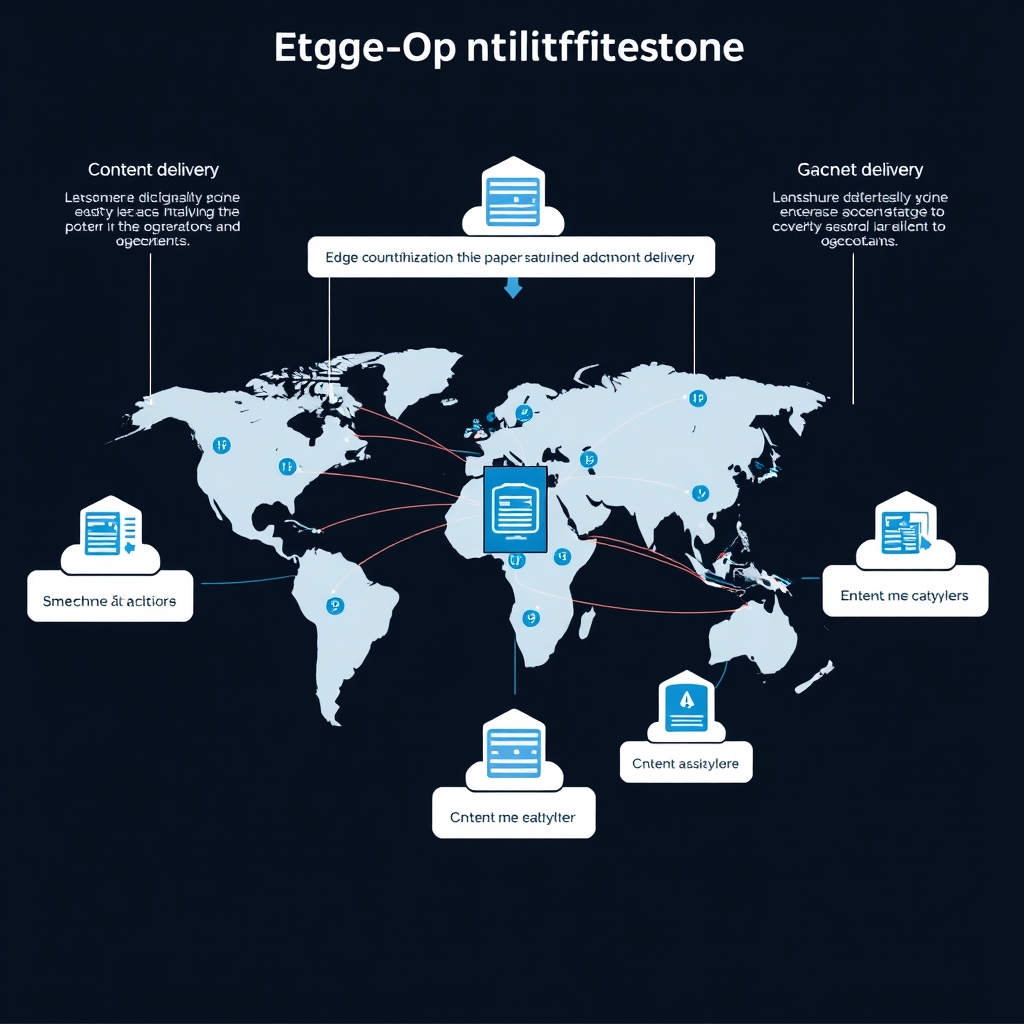
A content delivery network, commonly abbreviated as CDN, is a distributed system of servers that work together to deliver web assets such as images, scripts, and stylesheets to users across the globe. Instead of relying on a single origin location, a CDN places copies of these assets on multiple edge servers positioned in strategic geographic regions. When a request arrives, the CDN routes it to the nearest server, minimizing the physical distance data must travel and thereby reducing latency.
How CDNs Work The operation of a CDN begins with a process called caching, where static files are stored on edge nodes after they are first requested. Subsequent requests for the same file are served directly from the cache, eliminating the need to fetch the asset from the origin server each time. CDNs also employ load balancing algorithms to distribute traffic evenly across available nodes, preventing any single server from becoming overwhelmed during traffic spikes. Benefits of Using a CDN Implementing a CDN yields several tangible advantages for website owners and end users alike.
First, latency is reduced because assets are retrieved from a location physically closer to the requester. Second, bandwidth consumption on the origin server decreases, which can lower hosting costs and improve reliability. Third, CDNs provide built‑in protection against certain types of distributed denial‑of‑service attacks by absorbing and filtering malicious traffic before it reaches the origin. Caching Basics Caching is the technique of storing copies of frequently accessed data so that future requests can be fulfilled more quickly.
In the context of a CDN, the cache resides on edge servers and typically holds static resources such as images, CSS, and JavaScript files. By serving these resources from the cache, the system avoids repeated trips to the origin, which not only speeds up response times but also reduces the load on the backend infrastructure. Types of Caching There are several caching strategies that can be applied depending on the nature of the content and the desired performance characteristics. Static caching stores unchanging files for long periods, while dynamic caching handles pages that change frequently by using short expiration times.
Some CDNs also support origin shielding, where a middle layer of caches reduces the number of requests that reach the origin, further protecting the backend. Cache Control Headers Effective cache management relies on HTTP headers that instruct the CDN and browsers how long to store a resource. The Cache‑Control header can specify directives such as public, private, max‑age, and s‑maxage, each influencing the caching behavior differently. By carefully tuning these headers, developers can balance freshness with performance, ensuring that users receive up‑to‑date content without unnecessary network round trips.
Edge Optimization Concepts Edge optimization goes beyond simple caching to include techniques such as image compression, minification of code, and lazy loading of media. These processes are performed at the edge server, reducing the amount of data that must be transmitted and decreasing the time required for the browser to render the page. Additionally, some CDNs offer built‑in support for HTTP/2 and Brotli compression, which further improve transfer speeds. Choosing the Right CDN Selecting a CDN involves evaluating factors such as geographic coverage, performance metrics, pricing model, and integration capabilities.
Providers like Cloudflare, Akamai, and Fastly each offer distinct advantages, so it is important to test latency and reliability from multiple regions before committing. Many services also provide free trials, allowing teams to compare real‑world results against their specific workload requirements. Best Practices for CDN and Caching To maximize the benefits of a CDN, follow guidelines such as enabling HTTP/2, setting appropriate cache expiration times, and using versioned filenames for static assets to facilitate cache busting. It is also advisable to configure the CDN to serve compressed files and to implement secure token authentication for sensitive resources.
Regularly reviewing cache hit ratios helps identify opportunities for further optimization. Monitoring and Measuring Performance Ongoing observation ensures that the CDN continues to meet performance expectations. Key metrics include time to first byte, fully loaded time, and cache hit rate, which can be collected through real‑user monitoring tools or the CDN's own analytics dashboard. By analyzing these data points, teams can detect anomalies, adjust caching policies, and plan capacity upgrades as traffic grows. Conclusion In summary, content delivery networks, when combined with intelligent caching and edge optimization, form a powerful foundation for fast, reliable web experiences.
By understanding the underlying mechanisms and applying proven best practices, organizations can significantly reduce latency, improve user satisfaction, and enhance the resilience of their online services. Continuous evaluation and adaptation remain essential as web technologies evolve. Security Considerations When deploying a CDN, security should be addressed alongside performance. Most providers offer DDoS mitigation, TLS termination, and Web Application Firewall rules that filter malicious requests. It is important to configure proper SSL certificates and enforce HTTPS to protect data in transit. Additionally, token‑based authentication can restrict access to sensitive assets, preventing unauthorized hotlinking or content theft.
Future Trends The landscape of content delivery continues to evolve with emerging technologies such as edge computing, serverless functions, and AI‑driven optimization. Edge computing moves application logic closer to users, reducing round‑trip times for dynamic content. Serverless platforms allow developers to run code at the edge without managing servers, while machine learning models can predict traffic patterns to pre‑warm caches and allocate resources more efficiently. Cost Optimization Strategies While CDNs can reduce bandwidth costs, they also introduce service fees that must be managed. Many providers use a pay‑as‑you‑go model based on data transfer volume, so monitoring usage is essential.
Techniques such as compressing assets, leveraging browser caching, and purging stale content can lower consumption. Evaluating tiered pricing plans and negotiating enterprise rates may further improve the return on investment.